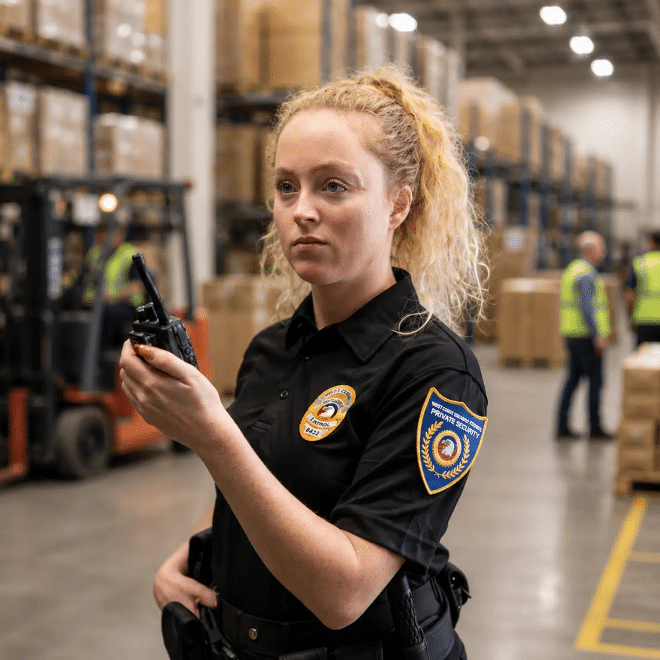

Good holiday security for retail stores starts before the first shopper walks in on Black Friday, which falls on November 27 this year. From then until the January returns rush, stores and shopping plazas carry more stock, more cash and more people than at any other time. Many also run with seasonal staff who are still learning the job. This checklist is for store owners and plaza managers in Southern California who want a plan they can act on this week. It covers the door, the sales floor, the parking lot, the stockroom after closing and the returns desk, plus what California law now means for your incident reports.
Key takeaways
- Book holiday security early, because demand for guards peaks from Black Friday to New Year.
- A visible guard at the entrance deters most opportunistic theft before it starts.
- Parking lots need coverage too, because shoppers, staff and cars are targets during the holidays.
- Full stockrooms raise the risk of after-hours break-ins, so plan night coverage as well as daytime posts.
- Shoplifting incidents fell 12.4% in 2025, but retailers reported rises in gift card fraud, phone scams and repeat offenders, according to the National Retail Federation.
- Since Proposition 36 took effect in California, a third petty theft can be charged as a felony, so clear incident reports matter more than before.
The quick answer
| Holiday period | Main risk | What helps most |
| Black Friday weekend | Crowds, long lines, grab-and-go theft | Extra guards at entrances and high-value aisles, a crowd plan for opening |
| December weekends | Shoplifting, car break-ins in the parking lot | A visible guard at the door, parking lot patrols |
| After closing in December | Break-ins while stockrooms are full | Mobile patrol checks or an overnight guard |
| December 26 to mid-January | Return fraud, gift card scams | Staff training, a guard near the returns desk at busy times |
Why the holidays need a different plan
Three things change at once in late November. Stores hold more stock. Foot traffic jumps. And many teams add seasonal workers who do not yet know what normal looks like on the floor.
The theft picture has shifted too. The National Retail Federation’s Impact of Retail Theft & Violence 2026 report found that shoplifting incidents fell 12.4% and merchandise theft fell 8.1% in 2025 compared with 2024. That is good news, and the report credits store security efforts for part of it. The same report found that 50% of retailers saw more repeat offenders, 42% saw more gift card theft and fraud, and 40% saw more incidents linked to organized retail crime.
For a holiday plan, that means two things. Keep watching the shelves and the doors. And give the returns desk, the registers and gift card displays the same attention, because that is where much of the newer loss happens.
California’s Proposition 36 in plain words
Proposition 36 took effect on December 18, 2024. Under it, petty theft or shoplifting can be charged as a felony when the person already has two or more prior theft convictions, whatever the value taken. Prosecutors can also add up the value of several thefts to reach the $950 felony line.
Why this matters to a store: the law gives prosecutors more options with repeat offenders, but only when there is a clear record. A same-day incident report with times, a description and saved video helps police and prosecutors act. The checklist below covers how to keep that record.
The holiday retail security checklist
Use these retail security protocols as a starting point and adjust them to your store. Each section is short enough to copy into your own post orders.
1. Before Black Friday
- Walk the store with your security company and agree where each guard stands.
- Write post orders that say what guards do when they suspect theft, and who calls police.
- Book coverage dates now, including Black Friday weekend, every December weekend and the week after Christmas.
- Brief seasonal staff on what to watch for and who to tell. Staff should report, not confront.
- Check every camera, light and lock before the rush, not during it.
2. Entrances and sales floor
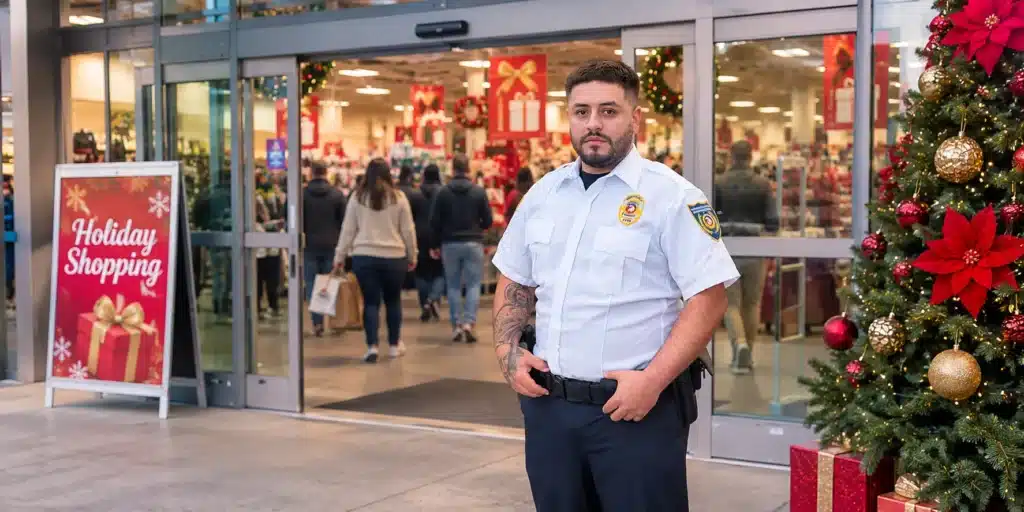
- Put a guard at the main entrance where every shopper sees them. Presence alone stops most opportunistic theft.
- Add coverage near high-value aisles such as electronics, cosmetics, tools and fragrance.
- Plan the opening rush on Black Friday morning: where the line forms, how many people come in at once and who manages the doors.
- Keep fire exits clear and unlocked during business hours, even when stock piles up.
- In larger centers, shopping mall security teams and store guards should agree who covers the common areas and who covers the store.
3. Parking lots and shopping plazas
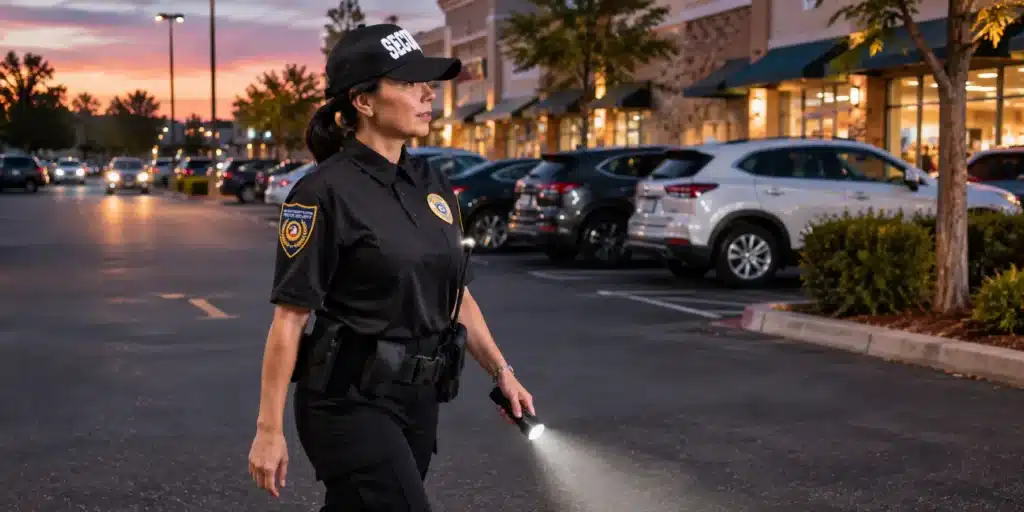
Plaza managers carry a different risk. Car break-ins, purse snatching and loitering rise when lots fill up and the sun sets early.
- A shopping plaza security guard or patrol keeps the lot visible and gives shoppers someone to go to.
- Offer staff escorts to cars after late closings, which are common in December.
- Check that every light pole works before the first weekend of the season.
- Use random patrol times so nobody can predict when the lot is empty.
For larger lots, our parking lot and garage security covers patrols across the whole property. A commercial plaza client wrote about this kind of patrol coverage in a recent Google review of our Riverside office.
4. Stockroom, loading dock and after hours
Back rooms are fullest in December, and late deliveries keep dock doors busy.
- Keep back doors locked and alarmed, and check them at every shift change. Our post on why retail back entrances need more protection than the front door explains why.
- Check deliveries against paperwork at the dock before anyone signs. See why loading docks are a major security weak point.
- After closing, use mobile patrol checks at random times, or an overnight guard for stores with high-value stock. Patrol officers can also lock up and respond when your alarm goes off.
5. Cash, returns and gift cards
- Vary cash pickup times and routes, and never count cash where shoppers can see it.
- At peak hours, a guard near the registers deters grab-and-run theft. The same applies to convenience store security, where cash and small goods sit close to the door.
- Train staff on common return fraud: receipt-free returns of high-value items, returns of goods that were never bought, and the same person returning again and again.
- Keep gift card displays in sight of staff, and watch for anyone handling many cards at once.
6. Incidents and reporting
- Write it down the same day: the time, what happened, a description of the person, what was taken and the police report number.
- Save the video before it records over.
- Guards should observe and report, not chase. A chase through a crowded store puts shoppers, staff and the guard at risk.
- Share a weekly summary with your security company so coverage can move to where problems happen.
How many guards do you need for the holidays?
There is no fixed formula. The right number depends on store size, the number of entrances, opening hours, past incidents, the value of your stock and whether the plaza shares coverage.
Two simple examples show the range. A single store with one main entrance often needs one guard at the door during peak hours, with patrol checks after closing. A shopping plaza often shares a patrol across the parking lot and common areas, while larger tenants add their own door guards. A short site walk is the fastest way to get an exact number.
What holiday security costs
At West Coast Security & Patrol, unarmed guards cost $24 to $35 an hour and mobile patrol costs $30 to $60 per visit. Most stores do not need armed guards for the holidays. The exceptions are stores with large amounts of cash or very high-value goods, as our guide to armed vs unarmed security guards explains. Your final price depends on the hours, the number of posts and the dates you book.
Frequently asked questions
When should I book holiday security guards?
As early as you can, ideally before mid-November. Demand for guards peaks from Black Friday to New Year, and early booking gives you time to agree post orders and walk the site.
Do I need an armed guard for Black Friday?
Usually not. A visible, trained unarmed guard handles most holiday risks. Armed coverage makes sense for stores that hold large amounts of cash or very high-value goods.
Can a security guard stop a shoplifter in California?
In some cases. California Penal Code 490.5 lets a merchant, or a guard acting for the merchant, detain a person for a reasonable time when there is probable cause to believe they took merchandise. Your post orders should set what your guards may do, and many stores tell guards to observe and report instead.
Is mobile patrol enough for a small plaza?
Often, yes, for after-hours checks and parking lot visits. If your plaza has busy evenings, repeated incidents or late closings, add a guard on site during those hours.
What should a guard do when they see shoplifting?
Follow the post orders. In most stores that means watching, noting details, telling the manager, saving video and calling police. Clear notes help police and prosecutors act, especially with repeat offenders.
Get Holiday Security in Southern California
West Coast Security & Patrol provides holiday security for stores and shopping plazas across Los Angeles, Orange, Riverside and San Bernardino counties, from door guards to parking lot and after-hours patrols. Tell us your dates and your site, and we will put together a free security quote. We answer the phone 24 hours a day at 1 (800) 484-7062, or you can request a quote. See our retail security services for year-round coverage.