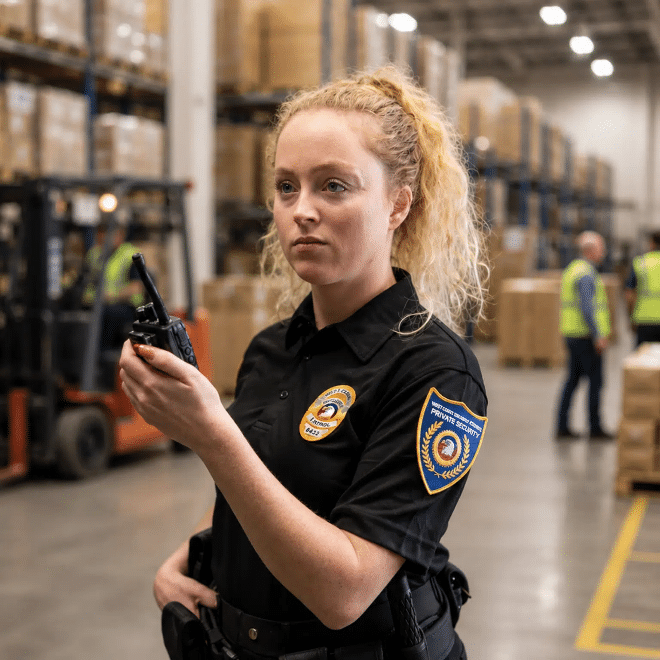

Warehouses and distribution centers carry more inventory value under one roof than almost any other commercial property type, and that makes them a target. The National Insurance Crime Bureau has tracked cargo theft losses climbing into the tens of billions of dollars nationally, with California consistently ranked among the states hit hardest. A vehicle patrol service warehouse operators can call on around the clock keeps eyes on the gates and yard, and pairing that coverage with armed security guards riverside at the busiest access points closes the gaps that make a facility an easy target in the first place.
We provide warehouse and distribution center security built around the specific risks of large industrial sites, not a generic guard-in-a-booth setup. That means gate access control, yard and dock patrols, and reporting that gives operations managers a clear record of who came and went.
Where Warehouses Actually Lose Inventory
Loss rarely happens the way people picture it. It is not usually a break-in through a locked door. More often it is a trailer left unattended at a dock too long, a gate that stays open between shift changes, a vendor delivery that never gets checked against the paperwork, or internal shrinkage that only shows up months later during a full count. Copper, electronics, and anything easy to resell move fastest once they are off-site, which is why loading docks and yard areas deserve as much attention as the building itself.

What Guards Actually Do on a Warehouse Site
A guard assigned to a warehouse or distribution center handles gate access control, checks incoming and outgoing vehicles against delivery schedules, and patrols the yard and dock areas on a documented rotation. Officers watch for propped doors, trailers left unlocked, and any vendor or driver who deviates from their expected route through the property. OSHA’s warehousing guidance covers many of the same access points from a safety angle, and a well-run security program tends to close both the safety gaps and the theft opportunities at the same time, since they usually show up in the same unmonitored corners of a facility.
Loading docks in particular need a coordinated approach between security and operations. OSHA’s guidance on loading dock hazards points out how much foot and forklift traffic moves through that single choke point, which is exactly why it is also where theft and safety incidents both tend to cluster. A guard stationed near the dock during active hours, paired with camera coverage and a documented vehicle log, closes off the window when a shipment is most exposed.
Why Documentation Matters as Much as the Patrol Itself
An undocumented patrol is hard to defend after the fact. Our officers log every gate entry, vehicle check, and irregularity through the Silvertrac reporting system, which gives warehouse managers a searchable record instead of a verbal handoff between shifts. That record becomes valuable well beyond security. It can back up an insurance claim, settle a dispute with a vendor over a missing pallet, or simply show a pattern of unauthorized access before it turns into an actual loss. Cargo theft in Southern California rarely happens in a single dramatic incident. It builds from small, unmonitored gaps that a documented patrol schedule is specifically designed to close.

Staffing a Warehouse the Right Way
Coverage needs change by shift, season, and site layout, which is why we build warehouse security assignments around armed or unarmed guards, vehicle patrols, and gatehouse staffing depending on what a facility actually needs rather than a one-size package. A distribution center running overnight freight needs different coverage than a seasonal storage facility with predictable hours, and warehouse security guards in Riverside and across our Southern California service area are assigned accordingly.
Internal shrinkage deserves its own mention, since it accounts for a meaningful share of warehouse loss and rarely gets caught by measures aimed only at outside threats. A documented security presence changes behavior on both sides of that equation. Employees are less likely to test a system they know is actively logging vehicle and gate activity, and any pattern that does show up in the reporting gives management something concrete to act on rather than a vague sense that inventory numbers are not adding up.
Planning Around Seasonal Peaks
Seasonal swings add another layer most warehouses have to plan around. A distribution center running lean staffing through slower months often triples its inventory value and truck traffic during peak season, and that spike is exactly when opportunistic theft tends to climb too. Scaling guard coverage up before a peak season starts, rather than reacting once shrinkage shows up on a count, keeps the added inventory value from becoming the added risk that it otherwise would be.
Coordinating with a facility’s existing systems matters as much as the guards themselves. We work alongside a site’s own cameras, access badges, and inventory management process rather than replacing them, since the goal is a second layer of verification, not a redundant one. A guard who knows a facility’s actual delivery schedule and vendor list can flag a mismatch that a camera alone would never catch, and that kind of site-specific knowledge is usually what separates a security program that actually reduces loss from one that just adds a uniform to the property.

Protect Your Inventory Before Shrinkage Shows Up on a Count
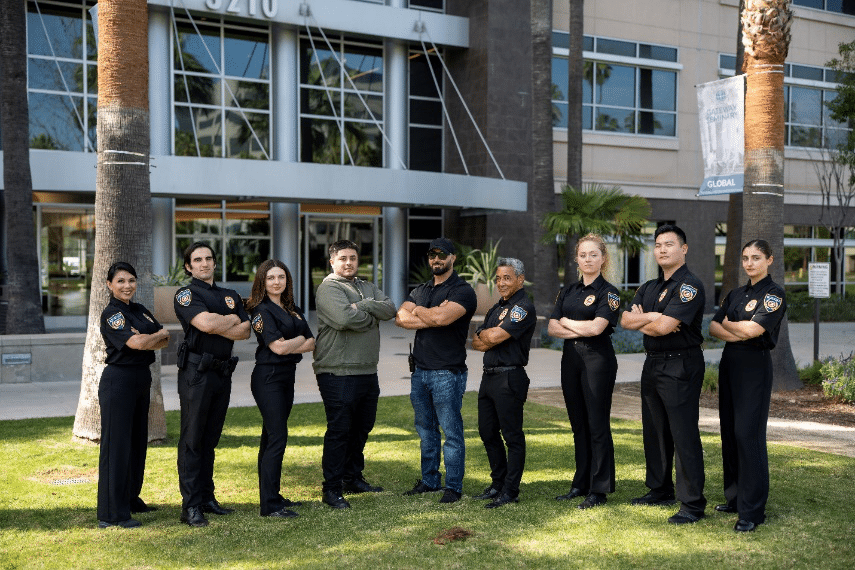
West Coast Security Patrol has staffed warehouses and distribution centers throughout Los Angeles, Orange, Riverside, and San Bernardino counties. We field licensed security guards los angeles ca teams, dependable private security guards riverside crews, and flexible security guards for hire los angeles staffing scaled to your site’s actual gate count and peak-season volume. Request a warehouse security assessment and find out what a documented patrol schedule would look like at your facility.