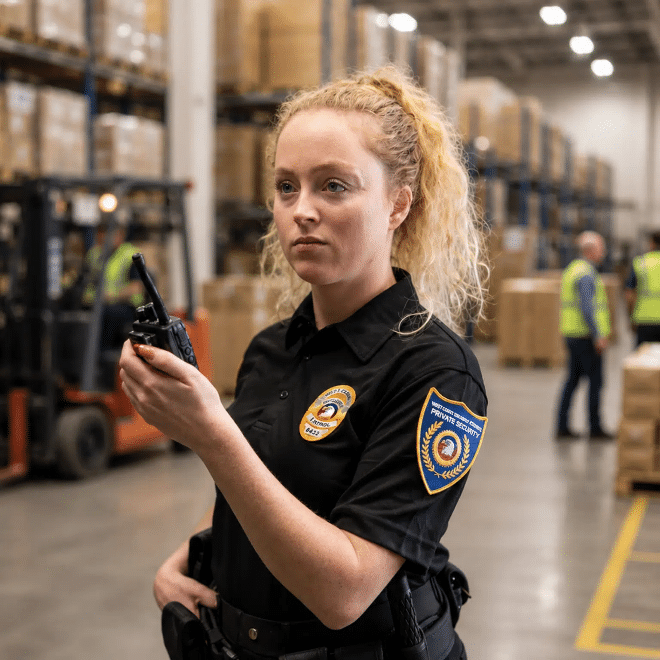
Large cold-storage and distribution warehouses across Los Angeles, Orange, Riverside, and San Bernardino counties have made headlines this year for the wrong reasons. A cold-storage facility fire in Boyle Heights burned for more than a week in 2026, and reporting on California’s mega-warehouses points to denser stacking, more automation, and larger quantities of flammable packaging materials as reasons these buildings burn hotter and longer than they used to. When a fire alarm system goes down, sprinklers are shut off for repair, or a facility sits mid-renovation, fire watch security Riverside coverage steps in to close the gap until permanent protection is restored. The same officers who staff that watch are trained commercial buildings security guards, so a warehouse never has to switch providers between an active fire watch and its everyday security needs.
We provide fire watch security services with trained, state-certified guards who patrol on a documented schedule, watch for developing hazards, and keep a time-stamped log until the fire marshal or insurance carrier signs off on repairs. A fire watch is not a formality. It is often the only thing standing between a building and a total loss while its normal fire protection is offline.
When a Warehouse Actually Needs a Fire Watch
Most fire codes require an active fire watch whenever a building’s primary fire protection is impaired or unavailable. That includes a fire alarm system that is down for testing or repair, a sprinkler system that has been shut off for maintenance, active welding or hot work near combustible storage, or a warehouse that sits vacant or mid-renovation with no working detection. NFPA 241, the standard that governs fire safeguards during construction, alteration, and demolition work, spells out many of these trigger points and the documentation a fire watch is expected to keep. A local fire marshal can also simply order a fire watch as a condition of keeping a warehouse open while corrections are made.
Some insurance carriers go a step further and make fire watch coverage a condition of keeping a policy active until permanent systems are restored, which turns the guard on-site into part of a facility’s compliance record rather than an optional extra.

What a Documented Fire Watch Actually Looks Like
A real fire watch is more than a person standing near the loading dock. Guards patrol the entire protected area on a fixed interval, commonly every 30 minutes, checking exits, sprinkler valves, electrical panels, and any area where hot work is underway. Each round gets logged with a timestamp, and any hazard gets reported immediately rather than held for a shift-change summary.
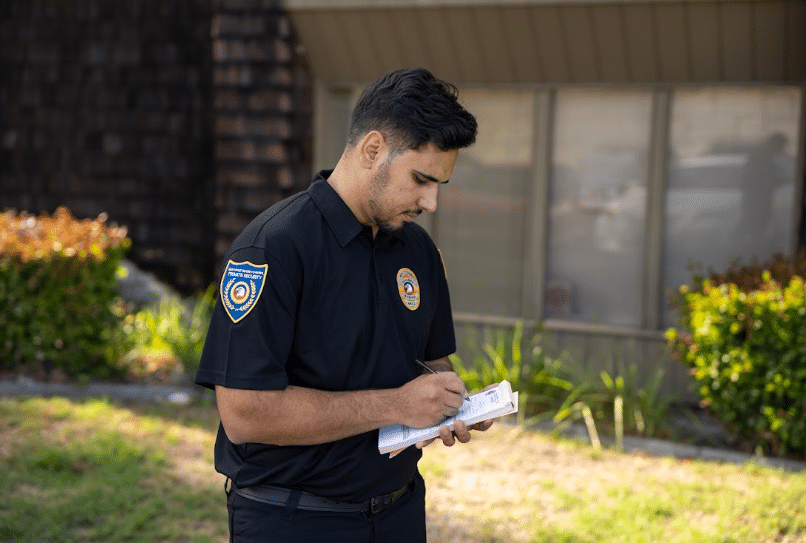
Our officers file those reports through the Silvertrac system in real time, so a facility manager, insurance adjuster, or fire marshal can review exactly when a round happened and what was found without waiting on a paper log that might have been filled out after the fact. That kind of record is often what turns a routine inspection into a quick sign-off instead of a longer conversation.
The Real Cost of Skipping Fire Watch Coverage
Warehouses and manufacturing buildings are already one of the more fire-prone commercial property types tracked by the National Fire Protection Association, and a facility running without active protection is a bigger version of that same risk. A single serious fire can shut down a distribution operation for weeks, damage inventory well beyond the burned section of the building, and put a facility’s insurance renewal at risk. Coverage for fire watch services in Riverside and the surrounding counties typically costs far less than a single day of lost throughput, which is usually enough to make the decision for most operations managers once the numbers are laid out.

Choosing a Fire Watch Provider Your Insurer Will Accept
Not every fire watch is documented well enough to satisfy a fire marshal or an insurance carrier. Look for a provider with state-certified guards, real liability coverage, and a reporting system that produces a verifiable, time-stamped log rather than a signature on a clipboard. We carry two million dollars in liability coverage, background-check every officer beyond the state minimum, and can typically get a licensed warehouse fire watch team on-site within two hours anywhere in our Southern California service area.
Coordinating Fire Watch Coverage With Daily Operations
Coordinating a fire watch with the rest of a facility’s operations matters just as much as the patrol itself. Warehouse managers dealing with an alarm outage or sprinkler repair are usually juggling a contractor’s timeline, a fire marshal’s expectations, and their own production schedule all at once, and a fire watch provider that communicates clearly with all three tends to shorten how long the impairment actually lasts. We coordinate directly with the repair contractor and the fire department when a watch is ordered, so the guard on-site is not the only point of contact trying to track when systems come back online.
Multi-day and overnight fire watch assignments are common on larger warehouse campuses, especially when a sprinkler contractor needs more than one shift to complete repairs across a large footprint. Staffing that kind of coverage requires more than one available guard, since a fire watch cannot have gaps in coverage without effectively starting the clock over on compliance. A facility that plans for that reality ahead of time, rather than scrambling once an alarm goes down, tends to get through an impairment with far less disruption to daily operations.

Get a Documented Fire Watch on Your Warehouse Before You Need One
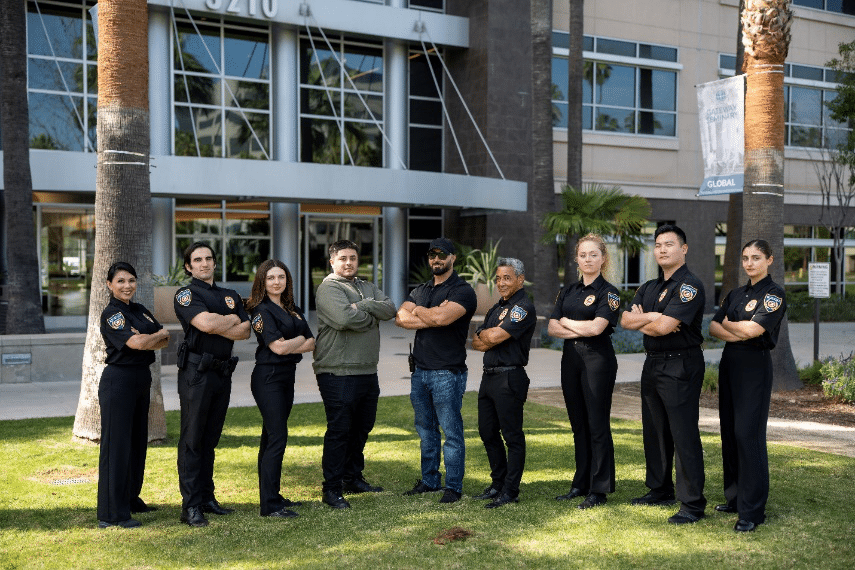
West Coast Security Patrol has covered fire watch assignments for warehouses, cold-storage facilities, and manufacturing plants across Los Angeles, Orange, Riverside, and San Bernardino counties. We’re a trusted commercial security guard riverside provider, backed by licensed security guards los angeles teams and flexible private security for hire riverside options for facilities of any size. Get in touch today and have a state-certified officer covering your facility before your next inspection.