

If you are working out how to hire security guards for a building, a job site or an HOA, the hard part is not finding a company. It is telling three quotes apart when they all promise “professional, licensed, reliable” guards. This guide is for the property manager, facility manager or board member with those quotes on the desk. It gives you 12 questions to ask, what a good answer sounds like, a five-minute way to check any California security company, and the red flags that show up before a contract is signed. It works for any company you are considering, including us.
Key takeaways
- Every company that provides security guards in California must hold a Private Patrol Operator (PPO) license from the Bureau of Security and Investigative Services (BSIS).
- You can check any company’s license for free on the California Department of Consumer Affairs (DCA) license search in about five minutes.
- California requires every PPO to carry at least $1 million in general liability insurance per occurrence, and the license is suspended if that insurance lapses.
- Every guard needs an active guard card and 40 hours of training in the first six months, and armed guards also need a BSIS firearms permit.
- The lowest hourly rate often costs more in the end, once no-shows, turnover and missing supervision are counted.
- Before you sign, read the contract for the term, the notice period and what happens when a guard does not show up.
The quick answer
| Check | What good looks like | Red flag |
| License | An active PPO license on the state lookup, under the same name as the quote | No license number, or a number that belongs to a different name |
| Insurance | A certificate of insurance sent on request, at least $1 million per occurrence | Will not send a certificate, or the policy dates have passed |
| Guards | Guard cards checked, training explained, the same guards on your site | Vague answers about who will be on site |
| Supervision | A named supervisor, site checks and written reports | Nobody checks the guard after the first week |
| Price | The rate explained line by line | A rate close to minimum wage, or extras that appear later |
| Contract | A clear term, notice period, scope and written post orders | Long auto-renewal and no way out |
Before you call anyone, write down what you need
Companies can only give you comparable quotes if they are quoting the same job. Ten minutes with a notepad saves you a week of back and forth. Write down:
- The site: address, type of property, size, number of entrances and parking areas.
- The hours: which days, which shifts, and whether you need holiday cover.
- The main risks: theft, trespassing, vandalism, break-ins, aggressive visitors, fire risk.
- The type of cover: a guard on site for the whole shift, or mobile patrol visits at random times.
- Armed or unarmed. Most sites need unarmed guards. Our guide to armed vs unarmed security guards helps you decide.
- What the guard must do and report: lockups, visitor checks, patrol rounds, incident reports, who gets called.
Send the same brief to every company. If you are not sure what you need yet, a good company will walk the site with you before it quotes. At West Coast Security & Patrol, that site visit is free. Our post on why every business should have a customized security plan covers this step in more detail.
12 questions to ask before you hire a security company
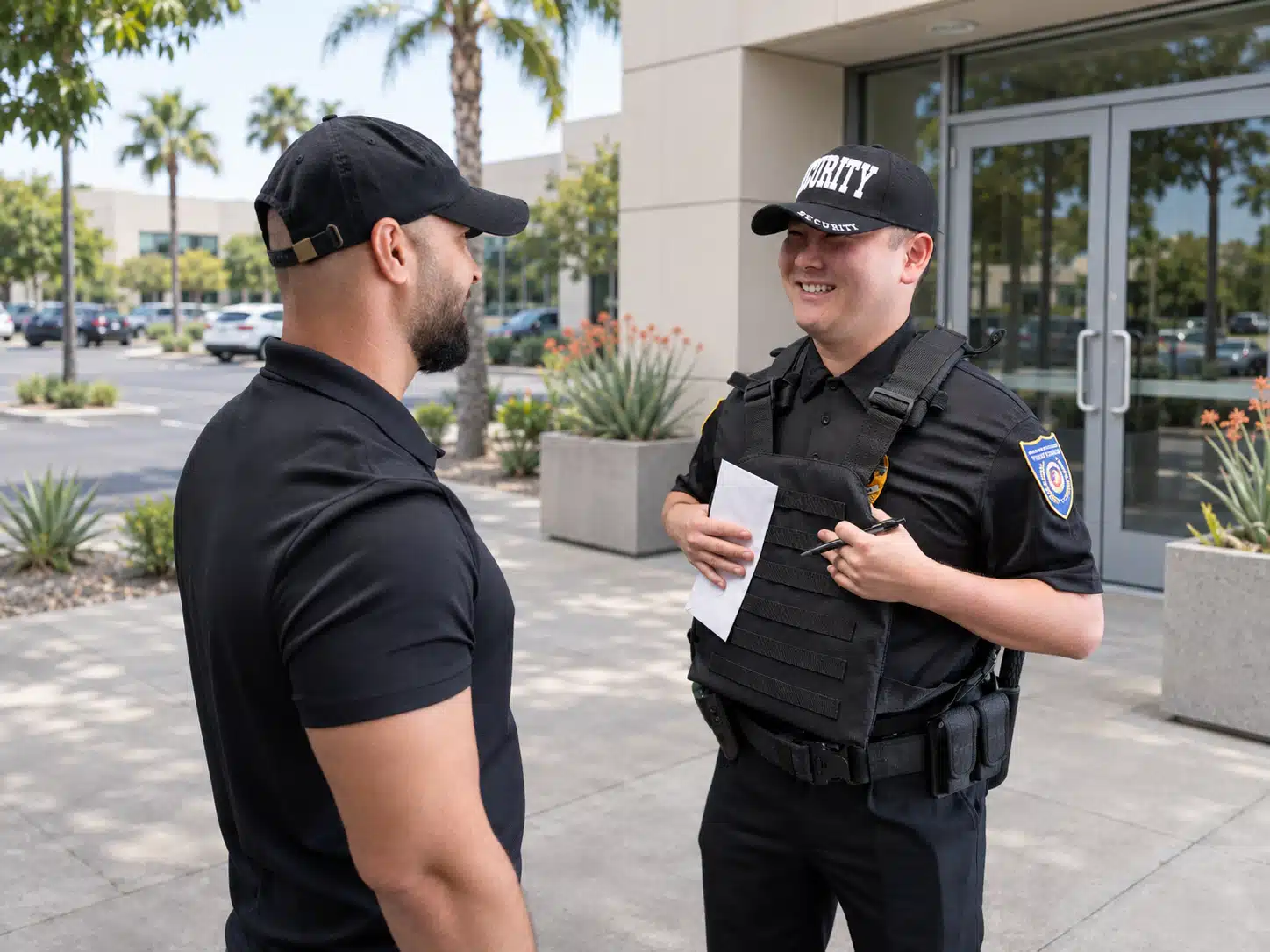
Each question below has three parts: why it matters, what a good answer sounds like and the red flag to listen for. Ask every company the same questions, and write the answers down.
1. Are you licensed in California, and what is your PPO number?
Any company that provides security guards in California must be licensed by BSIS as a Private Patrol Operator. The license is tied to one business name and one number.
A good answer is the number, given right away, under the same name as the quote. You can check it yourself in the next section. West Coast Security & Patrol holds PPO License #120329.
Red flag: the company has to “get back to you” with the number, or the number belongs to a different business name.
2. Can you send a certificate of insurance?
BSIS requires every PPO to carry general liability insurance of at least $1 million per occurrence and to keep proof on file with the Bureau. If a company lets that insurance lapse, its license is suspended by law until it shows proof again.
A good answer is a certificate of insurance in your inbox within a day or two, with policy dates that cover your contract. Many clients also ask to be named as an additional insured on the policy. Ask whether that is possible and what it involves.
Red flag: the company will not send a certificate, or the one it sends has expired.
3. Who will actually be on my site?
You are not hiring a logo. You are hiring the people who stand at your gate at 2 a.m. Ask how the company chooses the guards for your site, whether you will see the same faces each week, and how a new guard learns your site before the first shift.
A good answer covers a background check, an active guard card, a site briefing and written post orders the guard reads before starting. Ask too who is responsible if a guard on your site does something wrong. The answer should be simple: the company you signed with.
Red flag: no clear answer about who will be on your site, or a different guard every night with no briefing.
4. How do you screen and train your guards?
California sets a minimum. Every guard passes a background check through BSIS and completes 8 hours of training on the power to arrest and the appropriate use of force before registering. After that, the guard completes 16 more hours within 30 days and 16 more within six months, then 8 hours every year. Armed guards also need a BSIS firearms permit, which has its own training and range qualification.
A good company meets that minimum and adds training for your type of site, such as access control for an HOA, report writing for a construction site or customer service for a retail center.
Red flag: the company cannot say what training its guards have, or treats the state minimum as the whole program.
5. Who supervises the guard on my site?
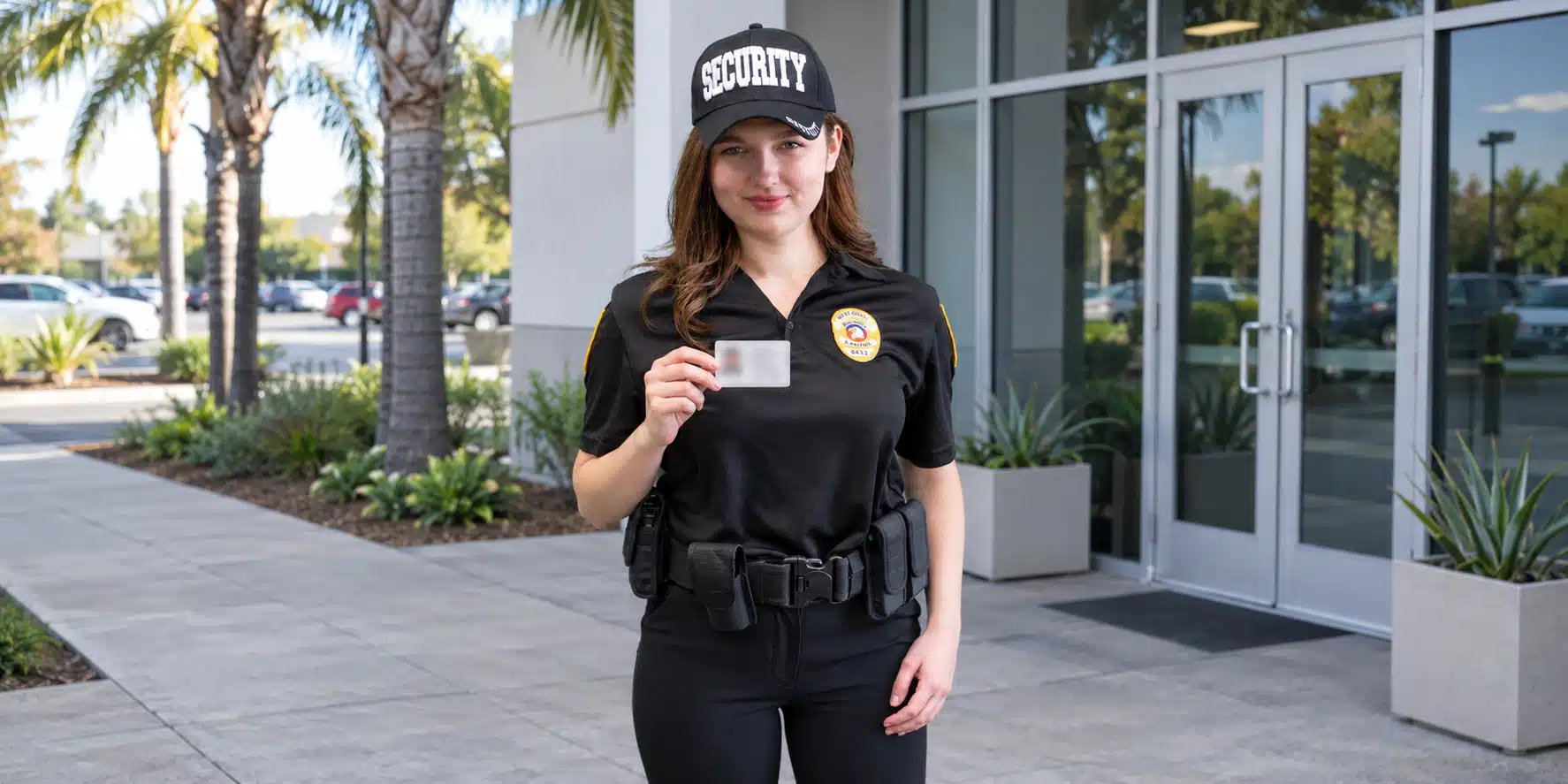
A guard nobody checks is the most common reason security fails. The first week usually goes well. The problems start in month three, when nobody is watching.
A good answer names a supervisor or account manager, explains how often someone checks the post, including nights and weekends, and tells you who you call with a complaint. At West Coast Security & Patrol, supervision is part of the hourly rate.
Red flag: “Our guards are experienced, they don’t need checking.”
6. What reports will I receive?
Reports are how you know the work is being done when you are not there. Ask what the guard records on each shift, when incident reports reach you and in what format.
A good answer includes daily activity reports, written incident reports and a sample you can look at, with private details removed. Patrol logs are useful too. Our post on how security patrol logs help businesses improve incident response explains what to look for. At West Coast Security & Patrol, incident reports are part of the hourly rate.
Red flag: no sample, or reports only “if something happens”.
7. What happens if a guard does not show up?
This question separates organized companies from small ones stretched thin. Ask how the company finds out a guard is missing, how it fills the shift and whether you pay for hours nobody worked.
A good answer is that the company tracks every shift, sends a replacement and never bills an empty post. At West Coast Security & Patrol, replacement cover is part of the rate. If a guard cannot make a shift, finding the replacement is our job.
Red flag: you are the one who finds out the post is empty.
8. Do you have experience with sites like mine?
An HOA, a construction site, a warehouse and a hospital need different skills. A guard who is good at a front desk may not be ready for a dark job site with copper on the ground.
A good answer describes sites the company already protects that look like yours, and how it handles the main risks there. Ask for one or two references from similar sites, and call them. Ask the reference how long they have used the company and what happens when something goes wrong.
Red flag: “We do everything” with no examples.
9. Are you local to my area?
A company with people nearby can send a supervisor or a replacement guard faster than one that manages your site from far away. Ask where the company’s supervisors work from and which other sites it protects near yours.
West Coast Security & Patrol works across Los Angeles, Orange, Riverside and San Bernardino counties.
Red flag: no other sites near you, and no clear plan for how a supervisor will reach yours.
10. What exactly is included in the hourly rate?
Two quotes can look $5 an hour apart and turn out to be the same price, or the other way round. Ask for the rate line by line.
A good answer tells you whether the rate covers insurance, supervision, reports, equipment, vehicles and fuel for patrols. It also tells you the holiday rate, the overtime rules and the minimum shift length. For reference, West Coast Security & Patrol charges $24 to $35 an hour for unarmed guards and $35 to $45 an hour for armed guards. That rate includes insurance, supervision, incident reports and replacement cover. Holidays are billed at time and a half, and the minimum shift is 8 hours.
Red flag: a low hourly rate with extras added after you sign.
11. What are the contract terms?
Private security contracts differ more than most buyers expect. Ask about the length of the term, the notice period to end it, auto-renewal, how rate increases work and who approves extra hours.
A good answer is a contract you can read in one sitting, with a clear scope and written post orders that describe the guard’s duties on your site.
Red flag: a long term that renews by itself, with no way out if the service is poor.
12. How do we reach you at 2 a.m.?
Incidents do not wait for office hours. Ask who answers the phone at night, what happens after the call and how a serious incident is escalated to you.
A good answer is a real person at a number you can save today. At West Coast Security & Patrol, we answer the phone 24 hours a day at 1 (800) 484-7062.
Red flag: an after-hours voicemail.
How to check a California security company’s license in 5 minutes
Most guides tell you to “check the license” and stop there. Here is how to do it, using our own license as the example.
- Go to the DCA license search at search.dca.ca.gov.
- Under Boards and Bureaus, choose Bureau of Security and Investigative Services.
- Under License Type, choose Private Patrol Operator.
- Enter the license number or the business name, then search.
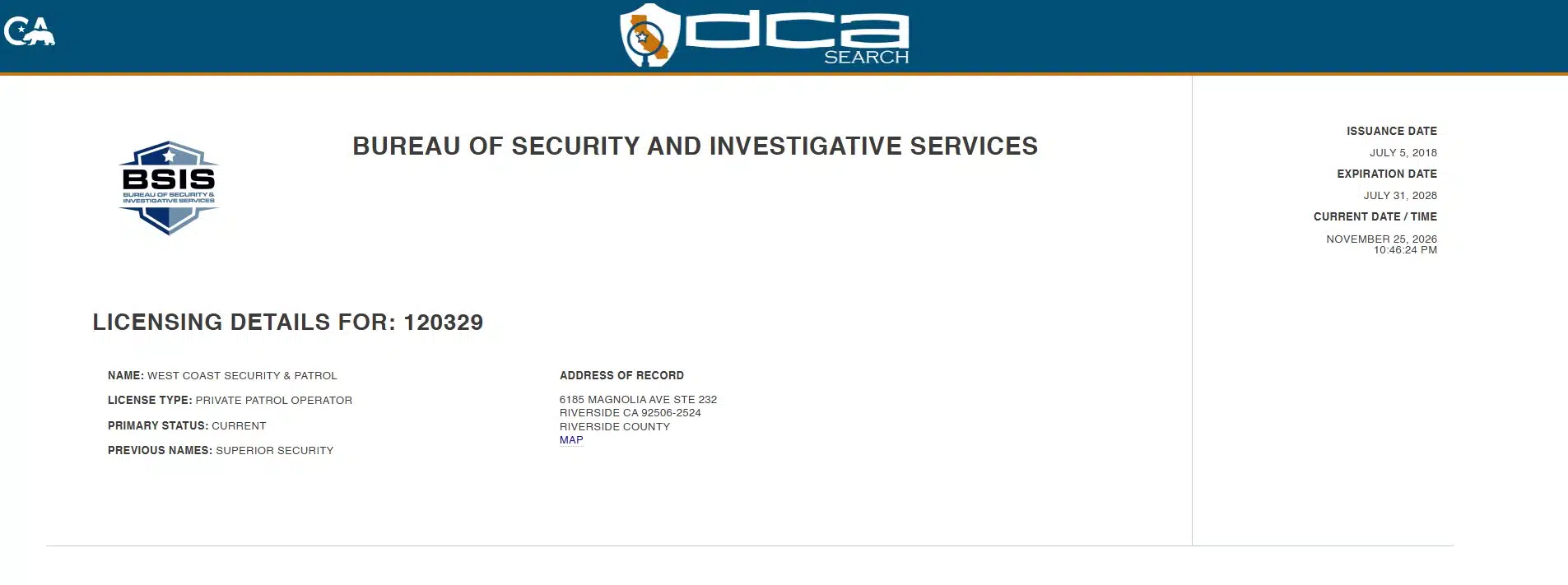
- Open the result. Check three things: the name matches the quote, the status is Current, and the expiration date is in the future.
Our record shows West Coast Security & Patrol, License #120329, Private Patrol Operator, status Current.
Then ask the company for its certificate of insurance. Check that the company name on the certificate matches the license, that the coverage is at least $1 million per occurrence and that the policy dates cover your contract. If anything does not match, ask before you sign.
Red flags that should end the conversation
- No license number, or a number that belongs to a different business name.
- No certificate of insurance, or one that has expired.
- A rate close to California’s minimum wage, which is $16.90 an hour in 2026 and rises to $17.40 on January 1, 2027. Payroll taxes, workers’ compensation, insurance and supervision cannot fit inside that rate, so something is being cut.
- No written post orders and no sample reports.
- Pressure to sign a long contract with auto-renewal and no exit clause.
- Guards who arrive without a guard card, or a company that cannot tell you who will be on site.
A note on “best security company” lists. Many pages that rank for top security guard companies are written by one of the companies on the list. Treat them as advertising. The questions above work on any company, including the ones on those lists, and including us.
A simple way to compare quotes
Copy this table. Score each company 0, 1 or 2 on each question: 0 for a poor or missing answer, 1 for a partial answer, 2 for a clear answer you could check.
| Question | Company A | Company B | Company C |
| 1. PPO license checked on DCA | |||
| 2. Certificate of insurance received | |||
| 3. Clear answer on who will be on site | |||
| 4. Screening and training explained | |||
| 5. Named supervisor and site checks | |||
| 6. Sample reports seen | |||
| 7. No-show plan in writing | |||
| 8. Experience with similar sites | |||
| 9. People and sites nearby | |||
| 10. Rate explained line by line | |||
| 11. Contract terms clear | |||
| 12. Real person at 2 a.m. | |||
| Total out of 24 |
One rule matters more than the total. A zero on license, insurance or supervision rules a company out, whatever its price.
Frequently asked questions
How do I know if a security company is licensed in California?
Search the company’s name or license number on the DCA license search at search.dca.ca.gov, under the Bureau of Security and Investigative Services. A licensed security guard company shows as a Private Patrol Operator with a status of Current. The name on the record should match the name on your quote.
What insurance should a security company have?
California requires every Private Patrol Operator to carry at least $1 million in general liability insurance per occurrence. Ask for a certificate of insurance and check the company name and the policy dates. Many clients also ask to be named as an additional insured.
Is the cheapest security company a good choice?
Rarely. A rate close to minimum wage leaves little room for training, supervision or replacement guards, and those gaps show up as no-shows and turnover. Compare what each rate includes before you compare the numbers.
What should be in a security guard contract?
The term, the notice period, auto-renewal rules, the hourly and holiday rates, the minimum shift, who approves extra hours and the scope of work. Written post orders should describe exactly what the guard does on your site.
How long does it take to start security service?
It depends on the site, the hours and how many guards you need. A simple site with one guard on a regular schedule usually starts faster than a large site with several posts. Ask each company for a start date in writing, and ask whether it includes a site visit and a guard briefing before the first shift.
Hire Private Security in Southern California
Check the license. Check the insurance. Ask the 12 questions. Then ask West Coast Security & Patrol the same questions and compare our answers with everyone else’s.
We provide security guard services in Southern California across Los Angeles, Orange, Riverside and San Bernardino counties, with unarmed and armed guards, mobile patrol and fire watch. When you are ready to hire private security, tell us about your site and we will visit it for free and put together a free security quote. We answer the phone 24 hours a day at 1 (800) 484-7062, or you can request a quote.
California PPO License #120329.


